

How to Declutter When You Are Downsizing: A Practical, Compassionate Guide for Seniors and Their Families
Updated: Jul 29
Downsizing is one of life’s biggest transitions... and it’s rarely just about your ‘stuff’. It’s about memories, identity and asking yourself: what comes with me into this next chapter? Whether you are a senior moving to a smaller house and decluttering a lifetime of belongings or supporting someone you love, this guide will walk you step by step through how to declutter when you are downsizing.
By Sue Spencer | KonMari Consultant | Professional Home Organiser, Hampshire UK | Published: 6th April 2026
The best way to declutter when downsizing is to start early, work by category (similar items) and focus on what you want to take into your next chapter rather than focus on what you’re leaving behind.
In this guide
How to involve family when you downsize

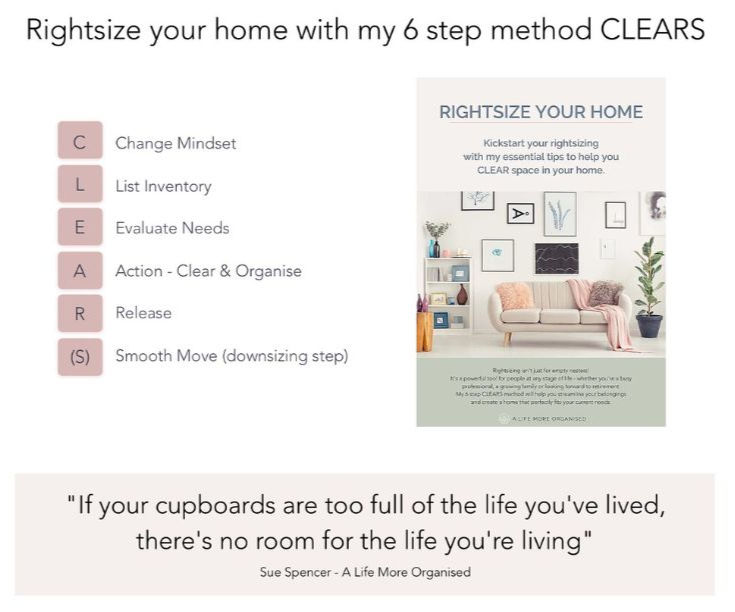
Downsizing and decluttering can sometimes feel like it's all about giving things up. I like to reframe this with my clients as Rightsizing – creating a home that supports how you live now. It’s a positive step, and one you can start to look forward to.
For many of my clients, a smaller, more considered home brings very real benefits: less to clean and maintain, lower running costs, spaces adapted for mobility needs and fewer day‑to‑day demands on time and energy. It often means having more space for the things that really matter – family, hobbies, travel, or simply slowing down.
Why Decluttering Before Downsizing Matters
Decluttering before you move is one of the most important steps when you are downsizing as it will:
Reduce removal costs – you won’t be paying to move things you no longer need
Prevent unnecessary clutter from arriving in your new home
Make packing, moving and settling in much easier
Help you feel more in control of this major life change
Most UK homes have lofts, garages and storage spaces filled with decades’ worth of belongings, so it’s wise to start your decluttering sooner rather than later. You’re unlikely to have the same level of storage in a smaller home, and giving yourself time to work through things gradually makes the whole process feel far less overwhelming in the months leading up to your move.
When should you start decluttering before downsizing?
I recommend beginning to declutter as soon as you start thinking about moving. In the early stages, focus on easier decisions: items you know you no longer use or need – for example, spare bedding you haven’t used in years or, like one of my recent clients, baking equipment since they no longer bake.
My clients find that having an organised approach takes away the pressure to declutter every day. Instead, set aside regular time each week and follow a simple plan so the process stays manageable. Breaking it into smaller, focused steps (such as decluttering bed linens rather than thinking about the whole home) helps you stay motivated. As you see and enjoy the space you’ve created, it often inspires you to keep going.
If you're not sure where to begin, my free Rightsizing Guide walks you through this step-by-step.

How do I know what will fit in my new home?
As soon as you’ve found a potential new home, I recommend:
Taking photos and videos of each room from different angles – it’s easy to forget details once you’ve left, so having these prompts is invaluable
Measuring wardrobes, cupboards and shelving
Reviewing which large furniture you’ll take and checking whether it will fit through doorways or staircases
Understanding what storage you will lose, such as a loft, garage or large garden shed
Working out which furniture and possessions will fit in your new home, rather than guessing and hoping, helps you avoid the stress of items arriving with nowhere to go. I use a floor‑planning tool called Home Sweet Home to map out each room with my clients, so we can see exactly what fits comfortably in their new space before moving day.
Why does downsizing feel so emotional and does it get easier?
Downsizing is rarely just practical; it’s emotional too. You’re not just sorting belongings, you’re sorting through a lifetime, so it’s important to be kind to yourself (or the person you’re supporting) as you go.
Letting go can bring up memories, a sense of loss and uncertainty about what’s next, and that’s completely normal. I see it time and time again with my clients, because a home holds much more than just furniture. Most of my downsizing clients don’t see their possessions as clutter; they’re treasured items collected over a lifetime, each holding a memory of a moment that's passed.
As clients begin to release what they no longer need, I often see a shift. A renewed sense of freedom, along with a chance to reconnect with hobbies, people and experiences that bring real joy. As I often remind my clients: "If your cupboards are full of the life you’ve lived, there’s no room for the life you’re living". This helps them see the process as creating space for what truly matters now.
The good news? It usually does get easier - the task that once felt never‑ending starts to feel more manageable and even full of possibilities.
A smaller home doesn’t mean less life. For many, it means a home that's easier to care for, with more time and energy for the things that really matter: family, hobbies, travel or simply relaxing. Both feelings can exist at once: the sadness of letting go and the relief of moving forward. That’s part of the process.
What is the best way to declutter when you are downsizing?
I always use the KonMari Method™ for downsizing because it starts with a clear vision of how you want to live in your new home, then guides you to declutter by category (such as clothing, books and paperwork) rather than room by room. We start with easier categories like clothing or books to build up confidence with decision making before moving on to more emotional items such as photos or sentimental objects.
As you work through your possessions, hold each item and ask yourself: “Does this support the life I’m moving towards?” Keep what you truly need, use and love, and release the rest with gratitude. Avoid the temptation to pack everything and “sort it later” at the other end – making thoughtful decisions before you move helps keep your new home calm, organised and free from unnecessary stress.

To help you get started, work through your downsizing using my KonMari Category Checklist - you can download it above.
How to involve your family in downsizing (without conflict)
Remember, downsizing is your move and your decision. What you choose to take with you, give away or let go of is yours to decide. Family members will naturally have opinions, and some conversations may be difficult, but approaching them with confidence in your own choices makes things easier for everyone.
It helps to keep conversations amongst family members open and inclusive. even when emotions are running high. Focus on what feels right for you (or your loved one), and listen to their needs and concerns so they feel supported on their downsizing journey. I often encourage my clients to keep a journal of their thoughts and decisions - it's a helpful reference for when they need to talk things through or revisit choices.

Once you've decided what you're keeping and taking to your new home, one of the most meaningful next steps is to offer items to family first. Invite them to look through your belongings and choose anything they would like. It can become a lovely opportunity to share memories and ensure special pieces go to people who will truly treasure them.
A gentle reminder: try not to feel hurt if family members don’t want items you imagined they would. It's often the smaller, more unexpected things – a favourite mug, an old recipe book – rather than the traditional heirlooms that hold the deepest meaning.

When more than one person is interested in the same item, it helps to have a fair and agreed process. Some families use coloured stickers so each person can mark the things they’d like, then, where there is more than one sticker, they take turns choosing. Others prefer to work through a shared list together. No method is perfect, and it can feel uncomfortable to divide a lifetime’s possessions, but agreeing on an approach in advance helps avoid misunderstandings, hurt feelings or longer-term conflict. The goal is for this process to bring the family closer, not create distance.
Once you’ve offered items to family and friends, anything that’s left and no longer needed can be:
Sold on platforms such as eBay, Facebook Marketplace or through an auction house
Donated to charity – many organisations, such as the British Heart Foundation or local hospice charities, will collect furniture and electrical items from your home
Included in a final house clearance if required
How to let go of sentimental items when you are downsizing?
Sentimental belongings are often the hardest part of downsizing. They carry memories, identity and family history, so take your time with this category and be gentle with yourself.
Gather all your sentimental items together and group similar items - this allows you to compare between items and decide which you feel the most attachment to and want to keep. Remember, if everything is special, then nothing is special.
Aim to keep a carefully curated selection rather than the whole collection
Create a meaningful memory box for your most treasured items
Digitise photographs, letters or children’s artwork so you can preserve the memories without needing as much physical space
Offer heirlooms to family members who may appreciate and use them
When letting go feels hard, remember: the memories live within you, not in the objects themselves. Love is not in possessions – it travels with you wherever you go.

Where to donate or sell items when downsizing in the UK
Many people find it easier to let go when they know their belongings are going somewhere useful. Over the years, I've built a tried-and-trusted list of charities, resale sites and recycling options that I use with my clients. Here are some practical ways to pass items on in the UK:
Donate to local charity shops for items that can be reused
Sell or trade in via platforms such as Facebook Marketplace, Vinted, Sell Your Books or eBay
For larger furniture, organisations such as the British Heart Foundation, local hospices, Emmaus and DEBRA often offer home collection services
Use your local council recycling centre for items that cannot be reused
Offer items to community groups or via local platforms such as Freecycle or Olio
Visit my resources page for a full list of selling, donation and recycling options.
How to sort through a lifetime of paperwork
Paperwork can be one of the most time‑consuming parts of any downsizing, especially as for many people it's been accumulating for decades. Old financial records, utility bills, and warranties for items long gone - all require careful attention.
I've written three detailed guides on my blog (which I've linked below) to help you tackle this step by step. When you're ready to downsize your paperwork, these guides will walk you through a clear, structured process - from sorting and deciding what to keep, understanding how long to keep important documents and finding the best ways to store paperwork in your new home.


Frequently Asked Questions
What’s the first step when downsizing to a smaller home as a senior?
The first step is to decide that you are going to downsize and give yourself enough time, rather than leaving everything to the last minute. Start early with simple, low‑emotion areas, like spare bedding or kitchen items you no longer use, and focus on what you want to take into your next chapter, not everything you’re leaving behind.
Is it normal to feel upset when downsizing?
Completely. Grief, resistance and sadness are all natural responses to leaving a home full of memories. Most people find that those feelings shift into a sense of lightness and even excitement as the process unfolds. You do not have to feel one thing at a time.
What should I not take when downsizing?
Avoid taking anything that doesn’t fit, is rarely used or no longer supports your lifestyle – there’s nothing more unsettling than sitting in your new home surrounded by boxes with no where to put things. Bulky furniture, duplicate kitchen items, old paperwork are all things you can easily let go.
How long does downsizing take?
It varies depending on the size of your home and how many belongings you have. Starting around six months before your move gives you time to work at a comfortable pace without pressure.
How do I start if it all feels too overwhelming?
Begin with easy categories and work in short sessions. Focus on what you want to take into your new life rather than what you are leaving behind. And if you need support, that is what I am here for.
Can I use the KonMari Method if I’m not naturally organised?
Yes. The KonMari Method is designed to be simple and step‑by‑step, not perfect. You don’t need to be naturally organised - just willing to make decisions about what truly supports your life now.
Should I hire a professional organiser to help me downsize?
Many people find that having an experienced, neutral person alongside them makes the process calmer, faster and less emotional. A professional organiser can help you plan, stay on track and make confident decisions without pressure.
What if I let go of something that turns out to be valuable?
It’s completely natural to worry about accidentally giving away something valuable. As a quick check, you can use tools like Google Lens to help identify items and get a rough idea of what similar things are being sold for online. Remember, though, that the price you see something listed for on eBay or other marketplaces is not the same as the price it actually sells at. It’s also worth considering the financial return versus the time and effort needed to photograph, list, pack and post items. In most moves, the single most valuable asset is the house itself — you don’t want to jeopardise a sale or delay a move because you’re stalling over a few individual possessions. Aim to be thoughtful rather than perfect, and focus on the overall outcome you’re working towards.
Ready to Take the First Step?
Downsizing doesn't have to feel overwhelming. To help you get started, I've put together a free Rightsizing Guide; a practical companion to everything covered in this post. Sign up below to download your copy and begin the process with clarity and confidence.
Downsizing is one of the most significant transitions you'll make, and you don't have to navigate it alone. If you'd like compassionate, practical support in Hampshire or across the UK, I'd be glad to help, find out more about working with me here.


